
A MORNING ON THE LAND WITH PCI
A post in honor of Petaluma River Park’s 6th birthday
by Devin Murray, Donor Relations Manager
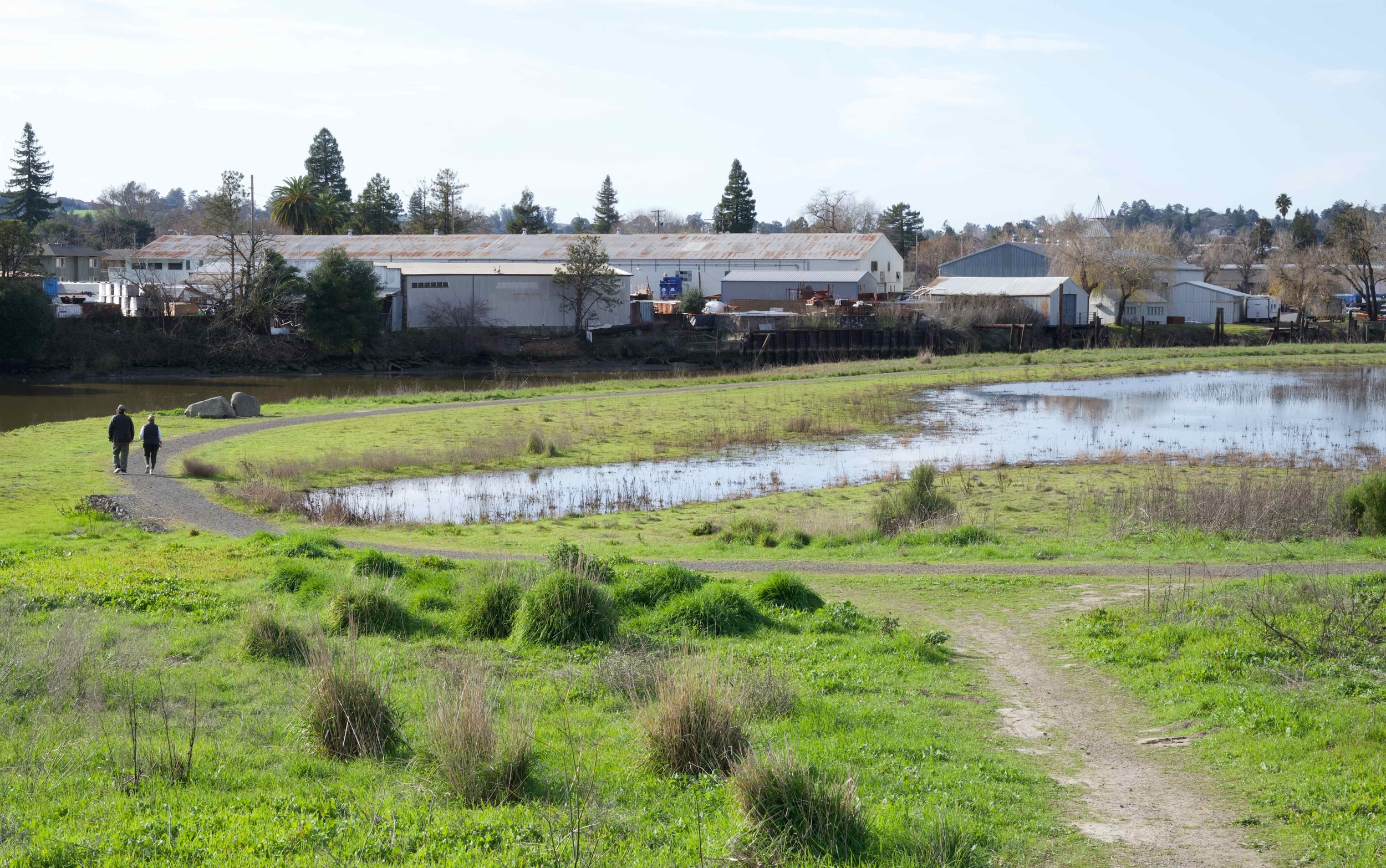
On a beautiful early fall morning, members of the Petaluma River Park Foundation team joined Principal Ecologist Joan Schwan, from our partner Prunuske Chatham Inc., to walk the land and discuss a few of the exciting plans in the park’s future. Today, the land is largely open, lacking trees but covered in coyote brush that, while modest, provides valuable shelter for birds and small critters. With PCI, we explored some of the key ecological features that will make the park come alive as it matures, including a thriving grove of trees and a living vernal pool.
The Quiet Giants: Our Trees
As part of the native habitat restoration taking place during the first phase of the park's transformation, over 200 trees will be planted by 2030, providing a friendlier environment for a wide variety of species, as well as natural shade for human park visitors. At the center of that plan are oaks! The Coast Live Oak is a true California icon, recognizable by its gnarled branches and sweeping canopy. The Valley Oak is the gentle giant of the grove, reaching up to 60 feet in just twenty years and living for up to 600. WOW!
Beyond the oaks, our palette will include other California stunners: Buckeye, California Bay, and Madrone. Buckeye in particular will thrive at the park, with its drought tolerance and comfort in clay soils.
Interested in learning more about our beautiful California oaks? Check out this great write up from Sonoma County Regional Parks.
The Hidden Magic of Vernal Pools
Many park visitors ask about the seasonal body of water they see at the midpoint of the 1.4 mile trail. That’s the vernal pool! Among California's most magical habitats, these pools consist of shallow depressions that fill with winter rains, then slowly dry under the summer sun. This rhythm of wet and dry supports species adapted to both extremes.
During the park’s first phase of habitat restoration, highly localized native plantings will be added, including popcorn wildflowers, which will bloom along the pool’s edges. Beneath the pool’s surface a tiny marvel called the clam shrimp are already living out their entire dramatic life cycle in just a few short months, feeding busily, then burying dormant cysts in the mud to survive the long, hot summer and hatch again when the rains return.
Additional plantings will also attract fairy shrimp, highly desired in vernal pools, which in turn will attract more animals. Native shrubbery plantings around the pool will lead to more habitat for birds, and eco-sensitive fencing around the pool will add to the buffer zone, keeping small animals out. So much activity!
Find more fascinating information about vernal pools on the Sac Splash site!
Six years in, while we look forward to the future of native plants and habitats for birds, jackrabbits, western pond turtles, fairy shrimp, and a myriad of so many other seen and unseen small creatures, we recognize that the landscape right now already supports their lives in quiet ways.
Our work is simply to give that life more room to grow.